
Signs of mice in an apartment and what to do next
Droppings, chewed packaging and scratching near walls can point to rodent activity. A pattern of signs is more useful than one noise. Record where it happens, protect food and involve building management when shared spaces may be part of the problem.
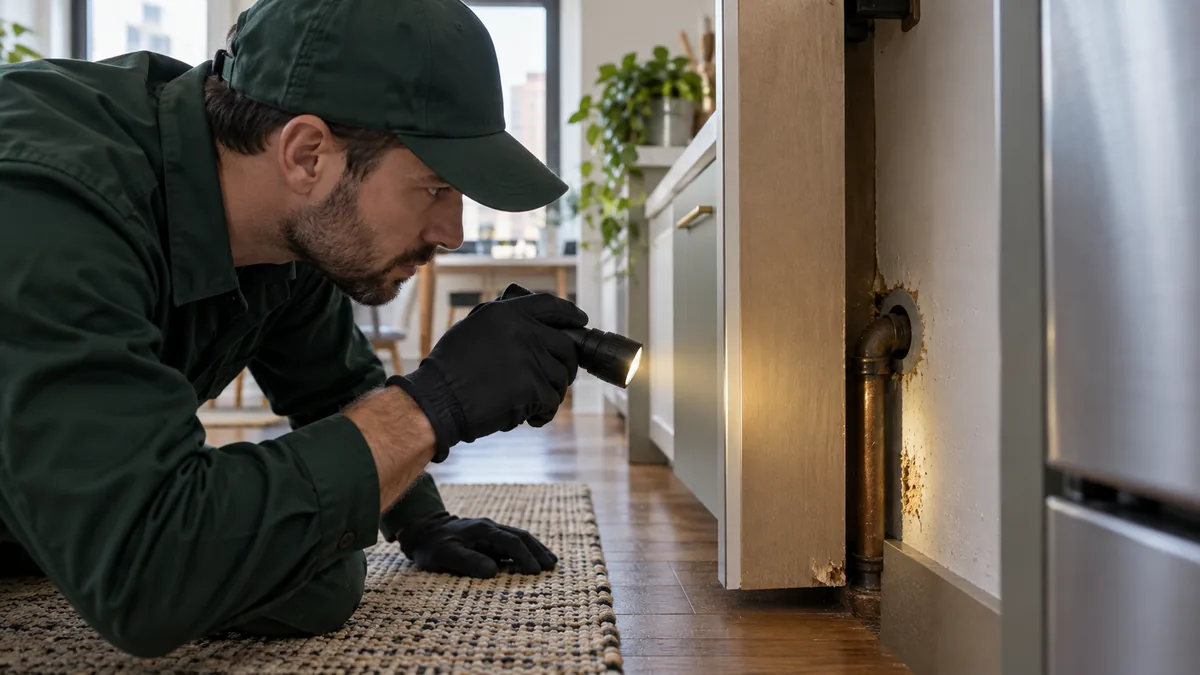
Look for several clues together
Small droppings near food storage, gnawed packets, disturbed nesting material and repeated scratching are reasons to investigate. A noise alone cannot tell you the species or how many animals are present. Old damage also does not show whether activity is continuing now.
Keep a simple record with the date, room and observation. A photograph taken without touching the material can help you explain the concern. Include signs in more than one room instead of assuming the place with the most visible evidence is the entry point.
Further guidance: NYC Health: rodent guidance for residents and owners
Check accessible edges without taking things apart
Look around the outside of cupboards, beneath accessible sink plumbing and along door thresholds. Note gaps, damaged finishes and food spills. Leave heavy appliances, electrical fittings and concealed spaces to someone equipped to inspect them.
For an apartment, report the pattern to the manager or superintendent. Utility routes and common areas may need attention beyond your unit. Share which spaces you can access and ask who can arrange the others. A kitchen visit may leave questions unanswered if the connecting service area is locked.
Do not sweep or vacuum droppings
CDC advises against sweeping or vacuuming rodent waste because this can put contaminated particles into the air. Keep people and pets away from the affected spot while deciding how it will be cleaned.
For suitable small cleanup tasks, CDC describes wearing rubber or plastic gloves, thoroughly wetting waste with an appropriate disinfectant, observing the stated contact time, then wiping it up and cleaning the surface. Read the complete CDC instructions and the product label first; different materials need different handling. Heavy contamination or signs inside ventilation systems call for professional assessment.
Further guidance: CDC: cleaning up after rodents
Reduce access to food while the source is assessed
Close food and pet-food containers, keep waste in a fitted-lid bin and clear ordinary spills. Make these routines consistent rather than relying on one deep clean. They reduce available resources but do not close a route through the building.
Ask the pest professional how activity will be monitored and how repair work fits into the plan. Keep recording new sightings after the visit. One quiet evening is encouraging, but the agreed checks provide a better way to judge progress and decide whether another area needs inspection.
- Store opened food in closed, durable containers.
- Report leaks and damaged openings to the person responsible for repairs.
- Keep notes about new activity and share them at the follow-up.
Further guidance: NYC Health: pest prevention in the home