
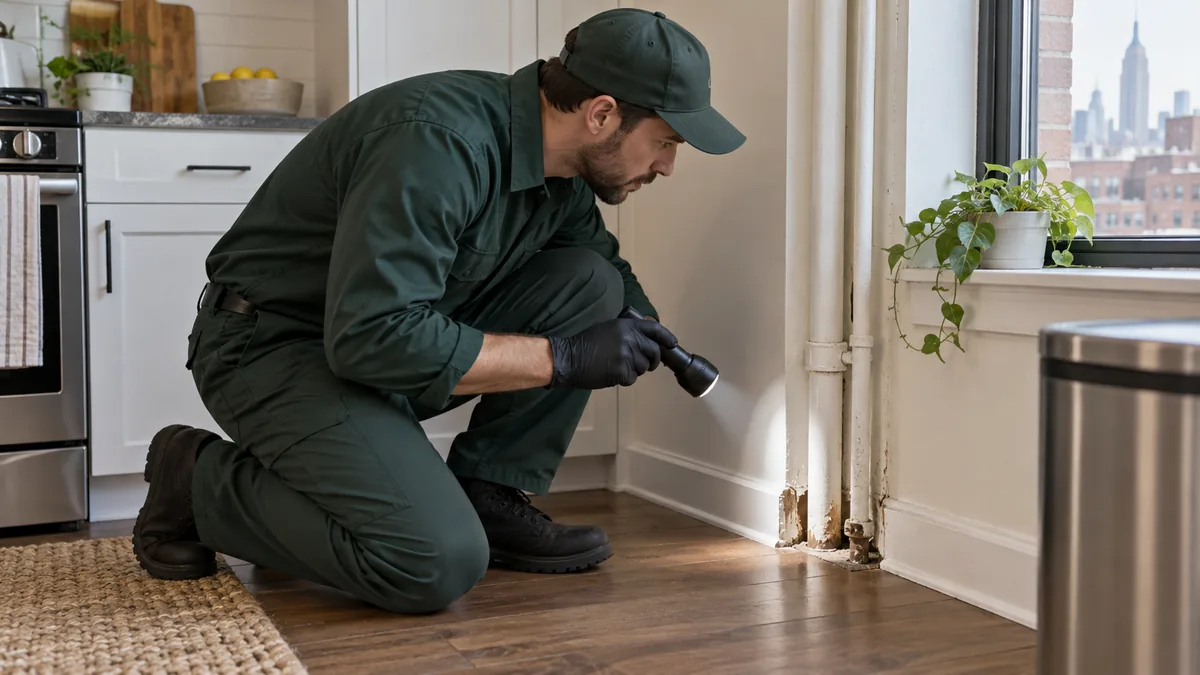
Signs to look for
Scratching in a ceiling, fresh pellet-shaped droppings and damaged packaging can show where to start looking. Note the location and time of each sighting so the inspection can follow repeated activity.
How treatment starts
The first task is to connect food sources, sheltered spaces and travel routes. Control measures and monitoring are considered alongside durable repairs to openings around doors, utility pipes and the building exterior.
Timing and follow-up
A rodent problem may take several checks to assess. Ask how devices will be monitored, what changes to watch for and when the technician expects to review entry-point repairs.
Prevention
Keep bins closed, remove easy access to pet food and reduce stored clutter along walls. A suitable door sweep or repair can matter as much as tidying up when a building gap gives rodents a route inside.
What affects the price
The number of affected spaces, access to rooflines or voids, monitoring and repair work shape the cost. Cleanup and exclusion should be clearly identified if they are separate from control visits.
Common questions
What should I tell you before the visit?
Describe where you noticed the activity, how long it has been happening and your property type. These details help us discuss rodent control and the right inspection.
What will the quote include?
The number of affected spaces, access to rooflines or voids, monitoring and repair work shape the cost. Cleanup and exclusion should be clearly identified if they are separate from control visits. Ask for the agreed scope in writing.