
What happens during a pest inspection?
A pest inspection should identify the pest, locate the activity and explain what is helping it persist. The useful outcome is a clear account of what was found and what needs to happen next—not simply a recommendation to spray.
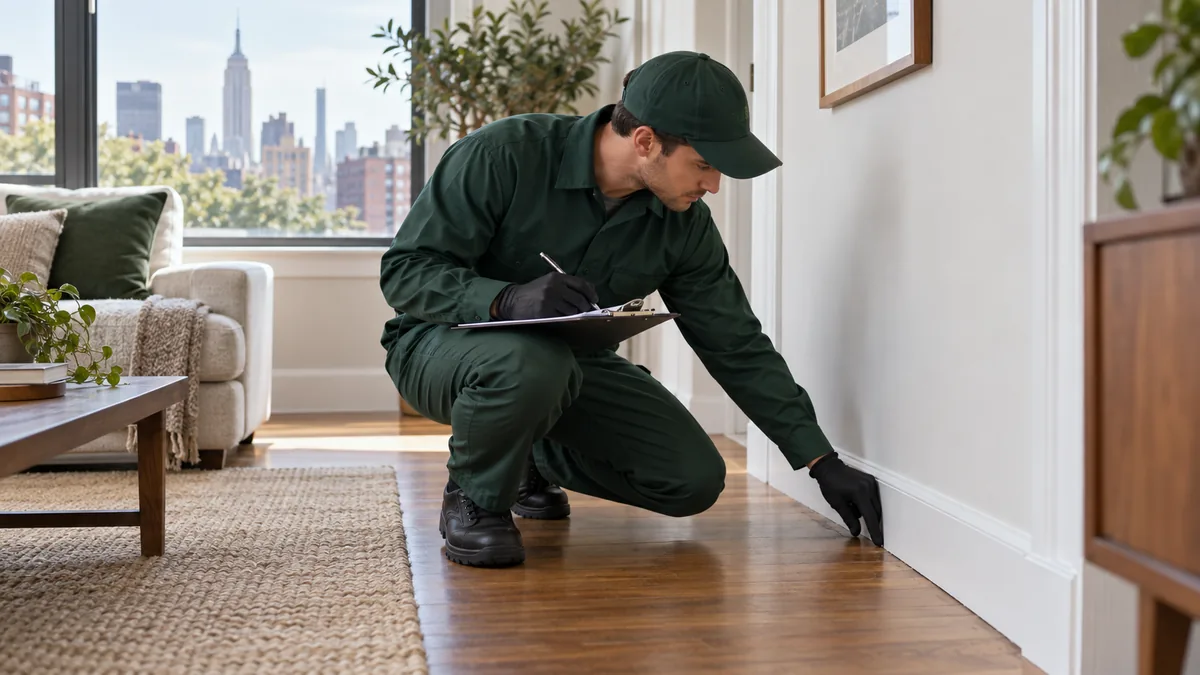
Start with the evidence you already have
Make a short note of the affected rooms, when you first noticed the problem and whether activity has changed. Existing photographs are useful. So are details about a recent leak, renovation or move, because they help explain what changed around the same time.
Describe observations rather than guessing the cause: “scratching above the kitchen after dark” is more useful than “there must be rats in the roof.” You do not need to collect an insect or disturb a hiding place before the appointment.
Make the right spaces accessible
Ask which areas need access before emptying cupboards or moving furniture. The preparation for an inspection can differ from the preparation for treatment. Tell the team about children, pets and practical access needs so the visit can be planned around your household.
In a shared building, a superintendent or manager may need to unlock a basement or utility room. Confirm who will arrange this. An inspection limited to one apartment cannot necessarily explain activity in spaces the technician could not enter.
- Have relevant photographs and sighting notes ready.
- Confirm access to the affected rooms and any agreed shared areas.
- Ask whether you should move stored items or leave evidence undisturbed.
- Check whether inspection and treatment are separate appointments.
Further guidance: NYC Health: preparation and prevention for residents
Understand what the inspection covers
The technician should connect visible pest evidence with nearby food, water, shelter and entry routes. Depending on the property and concern, that can include cupboard edges, plumbing openings, storage spaces or accessible outside walls.
Ask for the findings in writing. A useful report distinguishes confirmed activity from suspected routes and inaccessible areas. It also separates pest-control recommendations from maintenance work, such as repairing a leak or replacing a damaged door sweep. NYC Health recommends an inspection report and a plan that addresses underlying conditions.
Further guidance: NYC Health: selecting and working with a pest professional
Leave with a plan you can act on
Before booking treatment, check what work is included, what you must prepare and how progress will be assessed. Ask who is responsible for each repair and whether a return visit is included. Keep the inspection report and estimate together so you can compare the proposed work with the findings.
The first inspection may not settle every question. A locked space or unclear insect identification can require another step. That limitation should be explained plainly. If the proposal is vague, ask for clarification before agreeing to work or paying for a service you do not understand.