
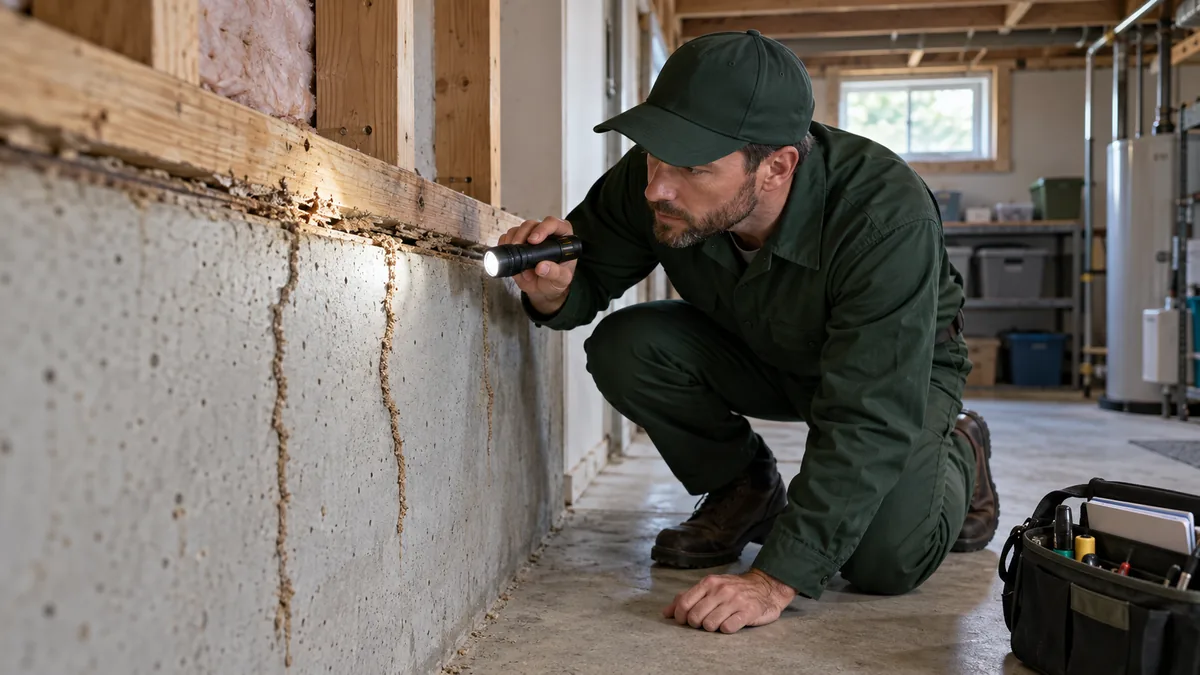
Signs to look for
Look for narrow earth-colored tubes, loose wings near windows or wood that feels thin beneath its surface. These clues deserve a closer look, but they cannot tell you on their own whether termites are still active.
How treatment starts
Accessible framing, moisture sources and ground contact help establish the scope. After identifying the evidence, the technician can discuss suitable treatment locations and whether a monitoring program belongs in the plan.
Timing and follow-up
The visit starts with access to the affected structure. Treatment and later checks depend on construction, the extent of activity and the selected method; ask for those stages to be included in the proposal.
Prevention
Keep stored timber clear of the house, direct runoff away from walls and repair persistent leaks. Reducing damp conditions is useful alongside treatment, especially around basements and crawl spaces.
What affects the price
A termite proposal depends on the building layout, accessible perimeter, extent of evidence and treatment system. Ask whether later inspections or monitoring are included in the stated price.
Common questions
What should I tell you before the visit?
Describe where you noticed the activity, how long it has been happening and your property type. These details help us discuss termite control and the right inspection.
What will the quote include?
A termite proposal depends on the building layout, accessible perimeter, extent of evidence and treatment system. Ask whether later inspections or monitoring are included in the stated price. Ask for the agreed scope in writing.