
Signs to look for
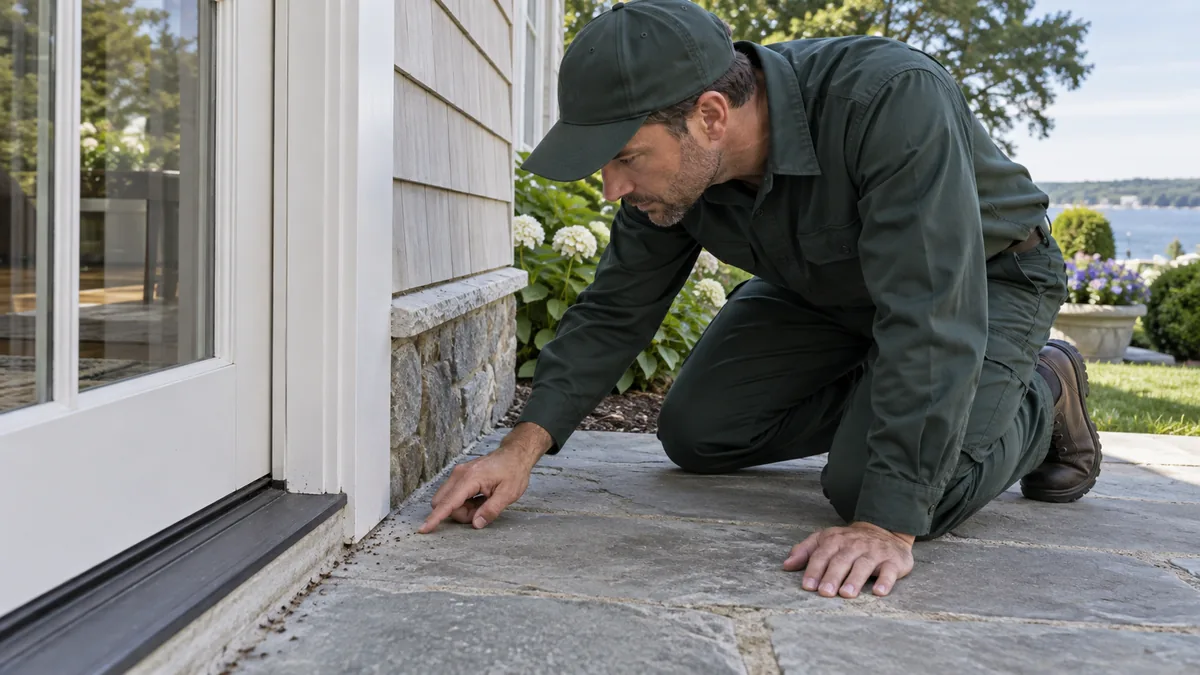
Watch where ants enter and whether trails lead toward food, damp areas or damaged wood. Winged insects need identification because termites and winged ants are easily confused at a glance.
How treatment starts
Species and trail patterns guide the work. The technician looks at likely nesting areas and access, then chooses a targeted approach that suits the colony and the location rather than just visible insects.
Timing and follow-up
Some methods need ants to carry material back to the colony. Ask whether to leave trails undisturbed, how to avoid disrupting the work and when persistent activity should be reported.
Prevention
Wipe away food spills, address leaks and keep storage sealed. Once the active route has been investigated, suitable repairs around doors and external penetrations help reduce repeat access.
What affects the price
Nest location, species, affected rooms and the difficulty of reaching concealed spaces influence the scope. Exterior work and follow-up should be identified in the quote.
Common questions
What should I tell you before the visit?
Describe where you noticed the activity, how long it has been happening and your property type. These details help us discuss ant control and the right inspection.
What will the quote include?
Nest location, species, affected rooms and the difficulty of reaching concealed spaces influence the scope. Exterior work and follow-up should be identified in the quote. Ask for the agreed scope in writing.