
Signs to look for
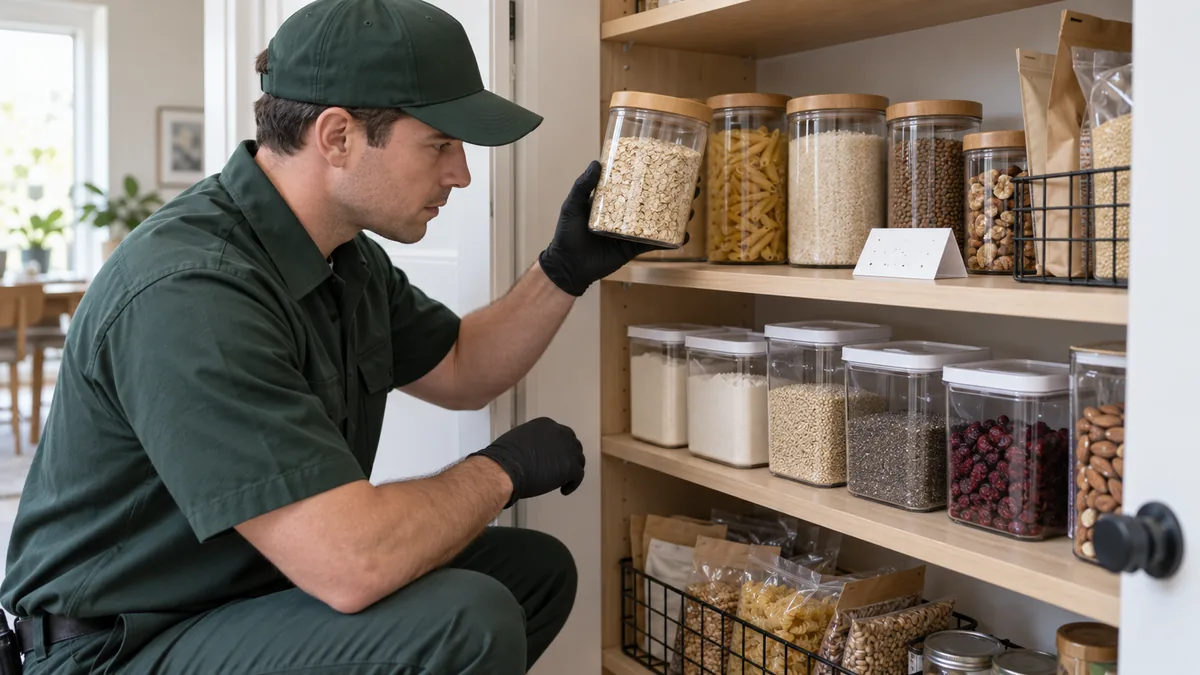
Fine webbing, larvae, small beetles or damaged dry-food packaging can point to a stored-product pest. Check less obvious items too, including pet food, birdseed and rarely opened ingredients.
How treatment starts
The search begins with suspect products and adjacent shelves. Removing the source, cleaning concealed shelf edges and suitable monitoring help establish whether the problem is continuing elsewhere.
Timing and follow-up
Adult insects may still be seen after infested products are removed. Ask what to monitor and when further sightings suggest another source needs to be found.
Prevention
Use tight-fitting containers, rotate older food and inspect packages before putting them away. Clean spills in shelf joints and avoid leaving opened bags undisturbed at the back of cupboards.
What affects the price
The number of cupboards, extent of stock and difficulty of locating the source influence the visit. Commercial inventory or widespread activity may require a broader assessment.
Common questions
What should I tell you before the visit?
Describe where you noticed the activity, how long it has been happening and your property type. These details help us discuss pantry pest control and the right inspection.
What will the quote include?
The number of cupboards, extent of stock and difficulty of locating the source influence the visit. Commercial inventory or widespread activity may require a broader assessment. Ask for the agreed scope in writing.