
Signs to look for
Where flies gather can be more useful than how many you see. Note repeated activity near drains, bins, food storage or an unused room, and try to describe the insect without handling it.
How treatment starts
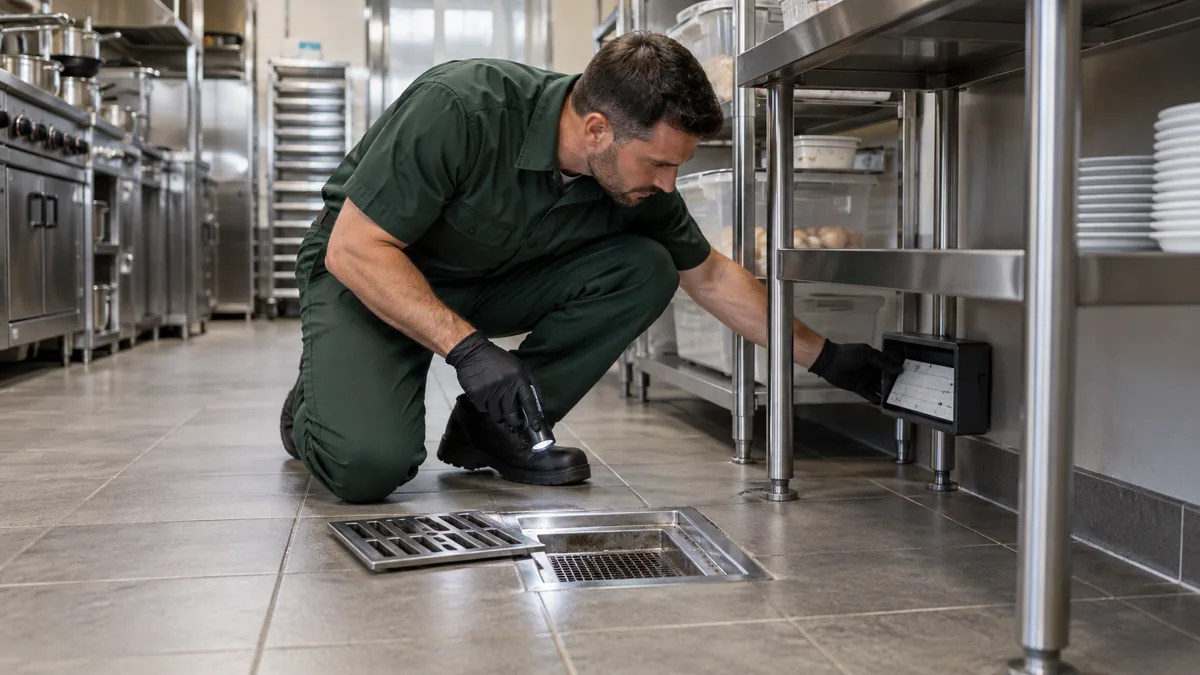
Species identification narrows the search for a breeding source. The technician checks moisture, organic buildup, waste handling and access points before discussing a combination of cleaning and control.
Timing and follow-up
Adult fly numbers can stay elevated until the source is corrected. Ask what needs to be cleaned or repaired and how long to monitor activity after those changes.
Prevention
Keep waste containers clean and closed, maintain drainage and remove residue beneath equipment. In food premises, consistent cleaning routines help prevent a source from developing again.
What affects the price
The type of premises, source location, equipment access and monitoring requirements shape the quote. Finding a concealed source can take more work than treating an exposed one.
Common questions
What should I tell you before the visit?
Describe where you noticed the activity, how long it has been happening and your property type. These details help us discuss fly control and the right inspection.
What will the quote include?
The type of premises, source location, equipment access and monitoring requirements shape the quote. Finding a concealed source can take more work than treating an exposed one. Ask for the agreed scope in writing.