
How to check for bed bugs beyond bites
Bites cannot confirm bed bugs. Look for physical evidence around sleeping and resting places: live insects, dark spotting, shed skins or eggs. An inspection can help distinguish these clues from another insect or an unrelated mark.
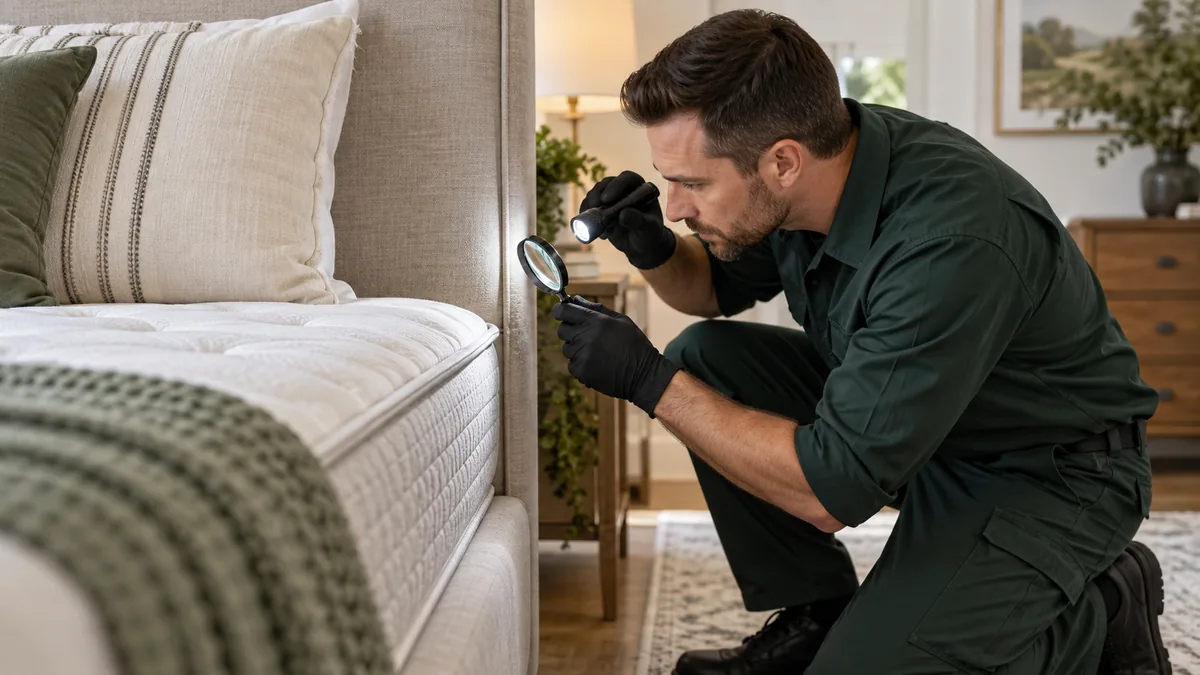
Use physical signs rather than skin reactions
EPA notes that bites can resemble other insect bites or skin conditions, and some people do not react to bed bug bites. A mark on the skin is therefore a reason to investigate, not proof of the insect responsible.
Check for several kinds of evidence. A stain by itself may have another explanation. Clear photographs of the suspected insect or material, with the location recorded, are more useful than a description of bites alone.
- Live insects around a mattress seam, bed frame or nearby furniture.
- Small dark marks that resemble ink spots on fabric.
- Pale shed skins, tiny eggs or empty eggshells.
- Rust-colored marks on bedding or the mattress.
Further guidance: EPA: finding and recognizing bed bug signs
Begin where people sleep or rest
Use a flashlight to look along mattress piping and seams, around labels and at accessible joints in the frame or headboard. Check a regularly used sofa as well as a bed. EPA identifies these as common hiding areas.
A quick look that finds nothing does not rule out a small infestation. Note the areas you checked and anything you could not reach. Avoid dismantling electrical fittings or heavy furniture to continue the search. If evidence remains unclear, identification is a better next step than choosing a treatment based on suspicion.
Further guidance: EPA: finding and recognizing bed bug signs
Avoid moving the problem through the home
Do not carry suspected furniture or loose belongings into another room to clear the space. EPA recommends avoiding movement from an infested area to an uninfested one. Ask how to contain and handle items before transporting them.
Throwing away a mattress is not automatically necessary. It can be expensive and may move insects through the building. If disposal is recommended, get clear handling instructions. In a rental or shared building, notify management so inspection and access can be coordinated. Do not use a homemade room-heating setup; treatment methods need appropriate equipment and controls.
Further guidance: EPA: steps for managing a suspected bed bug problem
Get preparation and follow-up instructions together
Bed bug management may combine physical methods, monitoring and appropriate pesticides. The exact preparation depends on the selected approach, so a checklist from a different company or treatment may not fit your appointment.
Before work begins, establish how laundry, storage and furniture will be handled, which rooms need access and how progress will be checked. Keep the written instructions and service report. If you notice new evidence afterward, record its location and contact the provider rather than introducing extra products on your own. Follow-up is part of assessing the result, not an optional detail to settle later.
Further guidance: EPA: integrated bed bug management